

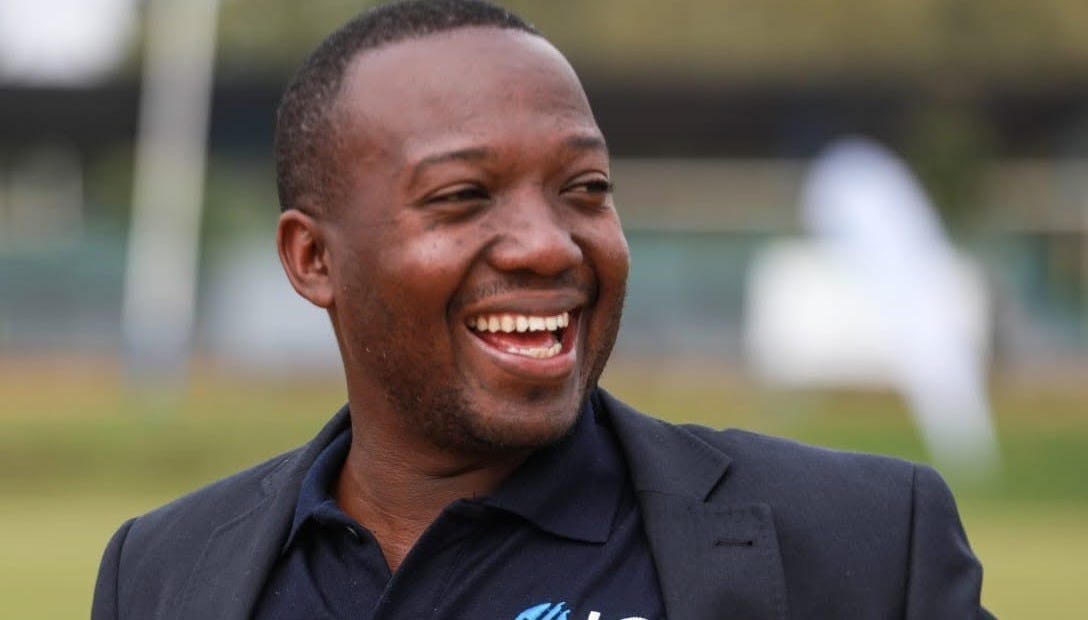
“For much of its 116-year history in Uganda, cricket has been an elite pursuit. But things have started to change a lot over the last few years,” Denis Musali, honorary secretary of Cricket Uganda (CU), tells Cricket Financial Journal.
A former youth and senior international for Uganda, Musali has first-hand experience of the highs and lows of Ugandan cricket over the past two decades.
The 40-year-old, who also handles media duties, sees encouraging signs of the game’s growth around the nation and is excited to share that story.
Cricket and Christianity
In Uganda, the cricket scene has historically been heavily intertwined with the religion of Christianity and Christian schools. During colonial times, many Roman Catholic and Anglican missionaries arrived in the “Pearl of Africa” to spread the gospel of Jesus Christ. They founded and built many Christian schools, where sports like cricket and rugby were an integral part of the curriculum.
Musali attended Busoga College Mwiri, a Christian school located in Jinja. “I was following in the footsteps of my father and grandfather, who both went to this school,” he says.
“It was really famous for its cricket programme; the facilities and coaching were top notch”.
It was here that he first encountered the sport of cricket and immediately fell in love with it.
“You had to be good to make the representative teams, as everyone in the school played cricket. It was highly competitive. I was an opening batter and wicketkeeper. In my generation, I was the standout,” Musali says proudly.
He made his international debut at the tender age of 14 and travelled with the U19 team to participate in the U19 World Cups hosted by Bangladesh and Sri Lanka in 2004 and 2006 respectively. Although the team only won two games across the two events and suffered heavy defeats against Full Members, Musali really enjoyed the experience of taking part in a global event.
“At the 2004 World Cup, we played against Sir Alistair Cook, Ravi Bopara and Luke Wright from England. Also, we had a match against an Irish team featuring the likes of Porterfield, Eoin Morgan, Kevin O’Brien, and Boyd Rankin,” he says.
“It was an amazing experience, definitely one of the biggest highlights of our cricketing careers.”
Expanding Beyond Traditional Pathways
However, cricket’s reliance on “elite” Christian schools with their expensive fees and posh reputation meant that the sport never caught on with the wider populace.
“Most of the cricketers in my generation attended Christian schools. It was very difficult to find a player who hadn’t come from this traditional pathway,” states Musali.
This stood in stark contrast to sports like Football and Netball which were played in most schools and consequently became popular, mass participation sports.
However, things have slowly started to change.
“When we played in the 2004 and 2006 U19 World Cups, there was a schools development programme being heavily funded by Coca Cola,” Musali says.
“This allowed us to start taking the game to other places, beyond the traditional pathway of missionary schools.”
The efforts have started to bear fruit, with the national schools’ competition growing from 10 schools to around 100 boys and 60 girls’ schools currently taking part.
“The game is no longer exclusive to a particular group of people. Today, plenty of non-missionary schools offer cricket as a sporting discipline to pursue,” Musali says.
In 2023, a new government law was passed, requiring every national sporting federation to have a national presence in at least 75% of the country.
“We are on a journey with the government to meet that target,” Musali says. “It is important that the game is not just centred in Kampala; so we have established ten development hubs around the country to ensure that every young boy or girl in Uganda has the opportunity to play cricket.”
Impact of 2024 T20 World Cup Appearance
Currently, Musali estimates that overall cricket participation numbers are approaching 500,000, counting everyone involved with the game at some level from junior age groups, schools cricket and beyond.
“Our local club cricket scene is centred around 24 clubs, with more than half of these being South Asian cricket clubs. Meanwhile, at the schools and U19 level, the players are mostly Ugandan African,” Musali says.
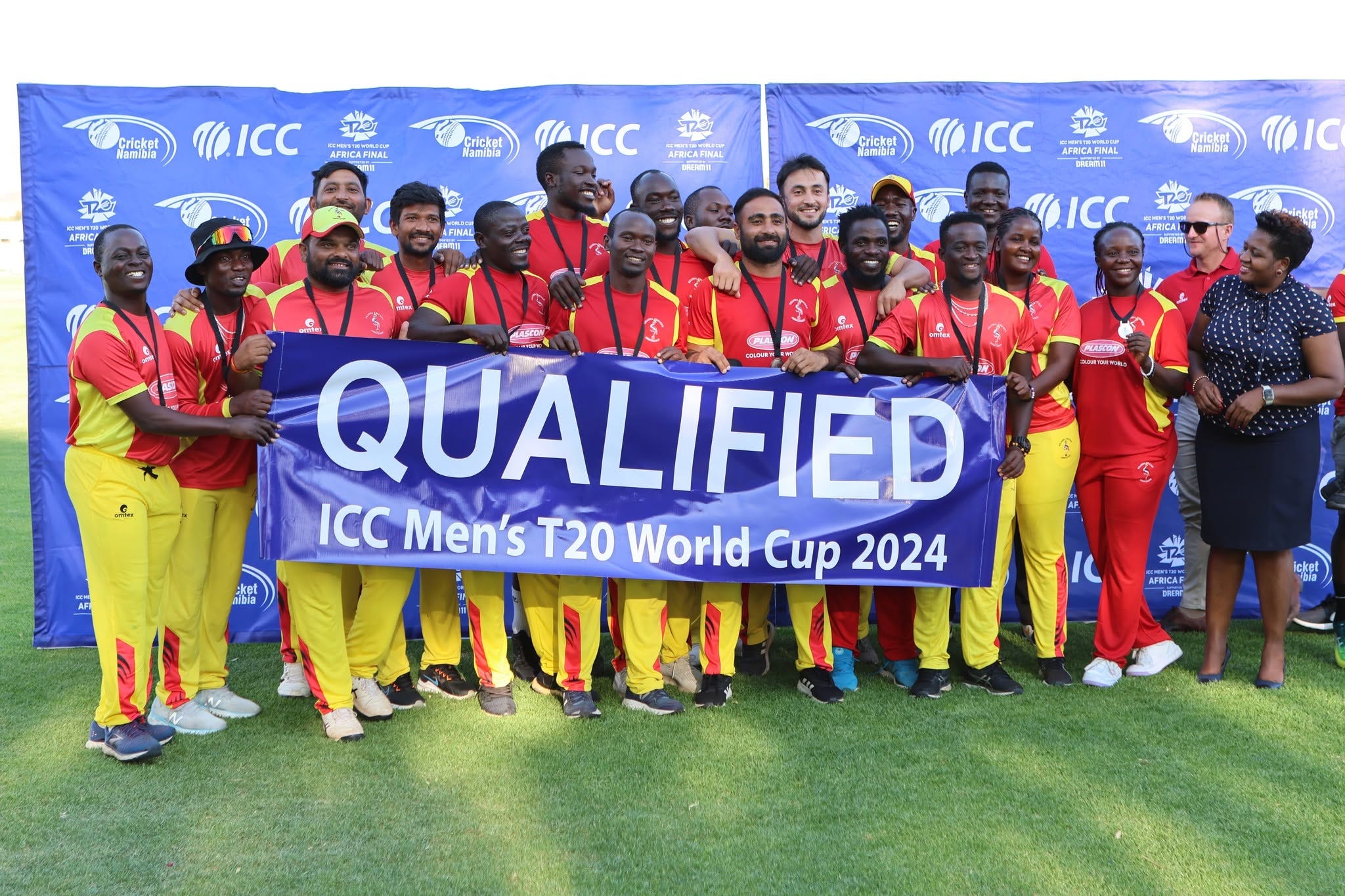
This diversity is also reflected in the makeup of the national team, which achieved history two years ago, by qualifying for the 2024 T20 World Cup. This was Uganda’s first ever senior appearance at an ICC global event.
“It was a wonderful moment for us. We are very proud of the boys. Especially for someone like Frank Nsubuga, who has played international cricket for Uganda since 1997. It was a crowning achievement for him to finish his career at a World Cup,” exclaims Musali.
Unfortunately, the event’s hosting in the United States and West Indies presented challenges to Ugandan viewers due to the time difference. “It definitely made it difficult for supporters back home to catch games live or organise local watch parties,” Musali says.
However, that did little to diminish the significance of the achievement. Appearance at a global event brought important flow on impacts for cricket in Uganda, lifting its national media profile and making it “a priority sport” for the government.
“We started receiving some funding from the government, around a billion Ugandan shillings or $228,000 USD annually. We also got a big sponsorship from Nike, which gave us $1.5 million USD spread over five years. The challenge for us is that we have to ensure that we keep repeating that level of success. Because otherwise, if you qualify for a World Cup once and it takes you another decade to play at that level again, people quickly lose interest,” explains Musali.
Africa T20 Cup Concept
Elsewhere, Musali has been involved in discussions taking place around African cricketing circles about the creation of an Africa T20 Cup, which would closely mirror the format of the highly successful Asia Cup. But there are significant hurdles to overcome first.
“The challenge in Africa is that it is very difficult to monetise African cricket. Most of the countries in Africa who play cricket are not rich,” he says.
“So, any participant outside of South Africa, Zimbabwe and to an extent Namibia, Uganda and Nigeria won’t be adding much commercial value and would need their accommodation and travel costs to be paid for.”

However, this hasn’t dampened enthusiasm amongst the sport’s administrators. There are plans afoot to launch a continental T20 tournament from 2027 with the recently hosted tri-series in Namibia serving as a test run for a future Africa T20 Cup.
“The idea behind the tri-series featuring South Africa, Zimbabwe and Namibia was to establish a commercially attractive series between the three strongest teams in Africa,” Musali says.
“So that any revenue generated from it can be distributed to the Africa Cricket Association to organise future events and to strengthen the game across the continent.”
“The eventual plan is to gradually add qualifiers and to have the likes of us and Nigeria participate in the main draw. But for that we need an investor with a long-term vision and hopefully five years down the road we can have a commercially successful event.”
2031 African Games
Cricket is also set to make a return to the 2031 African Games. While the sport debuted in the 2023 Games in Ghana, it was unfortunately excluded from the 2027 edition, due to hosts Egypt not being an International Cricket Council (ICC) member and lacking the infrastructure to accommodate the sport.
“I was part of the African Games in Ghana; it was a wonderful experience. So, we want to deliver that same level of excellence in Kampala and put on a good show for everyone. And with cricket being an official Olympics sport now, there are added incentives to include it in these kinds of continental events,” states Musali.
Recently, the board acquired a plot of land around 15-20 kms away from central Kampala with the aim of building a cricket facility there. “Hopefully, by the time the African Games come around in 2031, we would have secured the resources to do it,” he says.
“The ambition is to build two international cricket grounds there, something that would make the local cricket community proud and be a landmark facility for generations of cricketers to come.”
Future Goals and Promising Talents
Looking beyond, the board are eager to replicate the men’s success with the women’s team. “That would be ideal, for our women to qualify for a World Cup, either at the U19 or senior level. We also dream of hosting a U19 World Cup, maybe we could co-host it with Rwanda,” he chuckles.
Furthermore, CU want to gain permanent ODI status. “We have come close many times but just missed out,” Musali says. “If we become an ODI nation, we will receive more funds from the ICC. We can then pay our players better and invest more funds into grassroots development.”
And with plenty of promising talent coming through the system, like 19-year-old Gerald Olipa, Musali is confident that Uganda have what it takes to take men’s cricket to the next level.
“Gerald just finished high school last year but has quickly developed into one of our key top-order batters. He dominated his age category and was outstanding at U19 level, so we are happy to see him maintain his performance levels in the senior team as well,” he says.
Then there is the young pace duo of Juma Miyagi and Cosmas Kyewuta. Both players have T20 World Cup experience from 2024 and are capable of hitting the 140 km/h mark on the speed gun. “Juma and Cosmas came through our junior programmes. The challenge for us is to keep them fit. They are very susceptible to injuries, considering the volume of cricket they play. Juma was recently playing club cricket in Zimbabwe in the National Premier League,” Musali says.
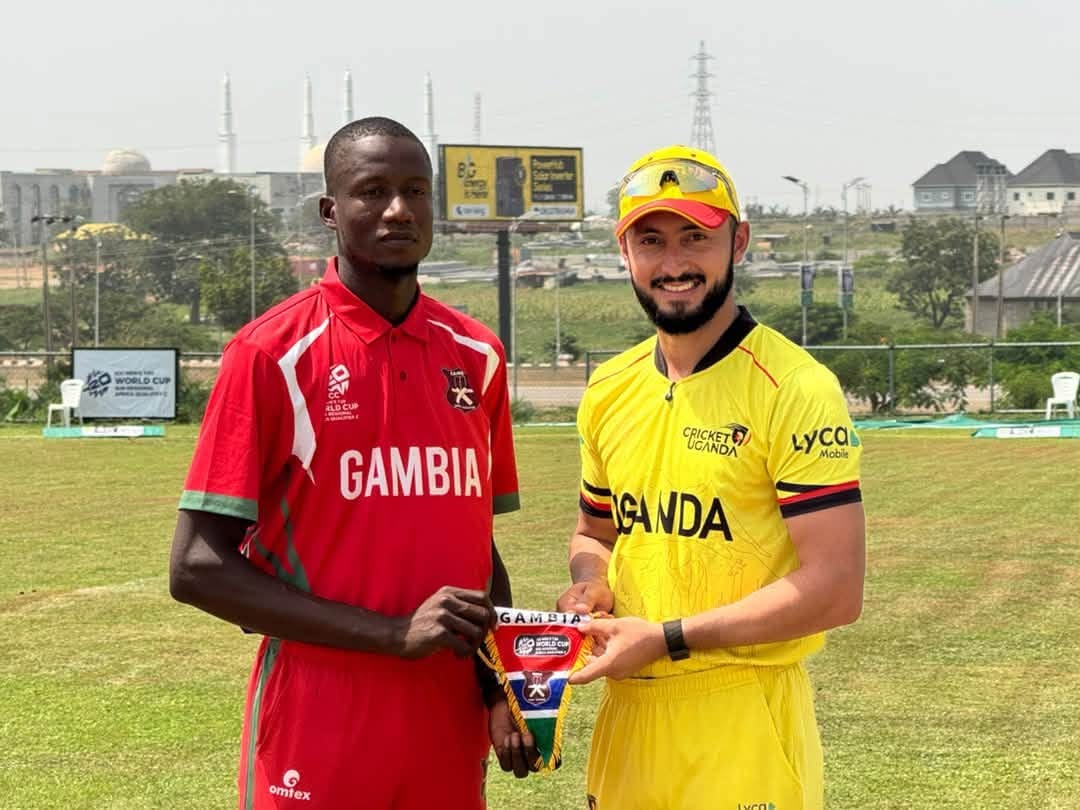
Lastly, captain Riazat Ali Shah is the undisputed star and leader of the Ugandan team. The Pakistan-born 28-year-old is a key contributor, averaging 34.71 with the bat and 21.87 with the ball in T20I cricket.
“The challenge for us is to expose these players to different environments, provide opportunities for them to go on overseas tours and challenge themselves in different conditions. With better coaching, we can maximise their potential and really, the sky is the limit,” Musali says.
For Uganda, the challenge now is to turn promise into consistency. The foundations are being laid, the talent is emerging and after tasting T20 World Cup action in 2024, the board is determined to ensure that it doesn’t remain a one-off event.
