
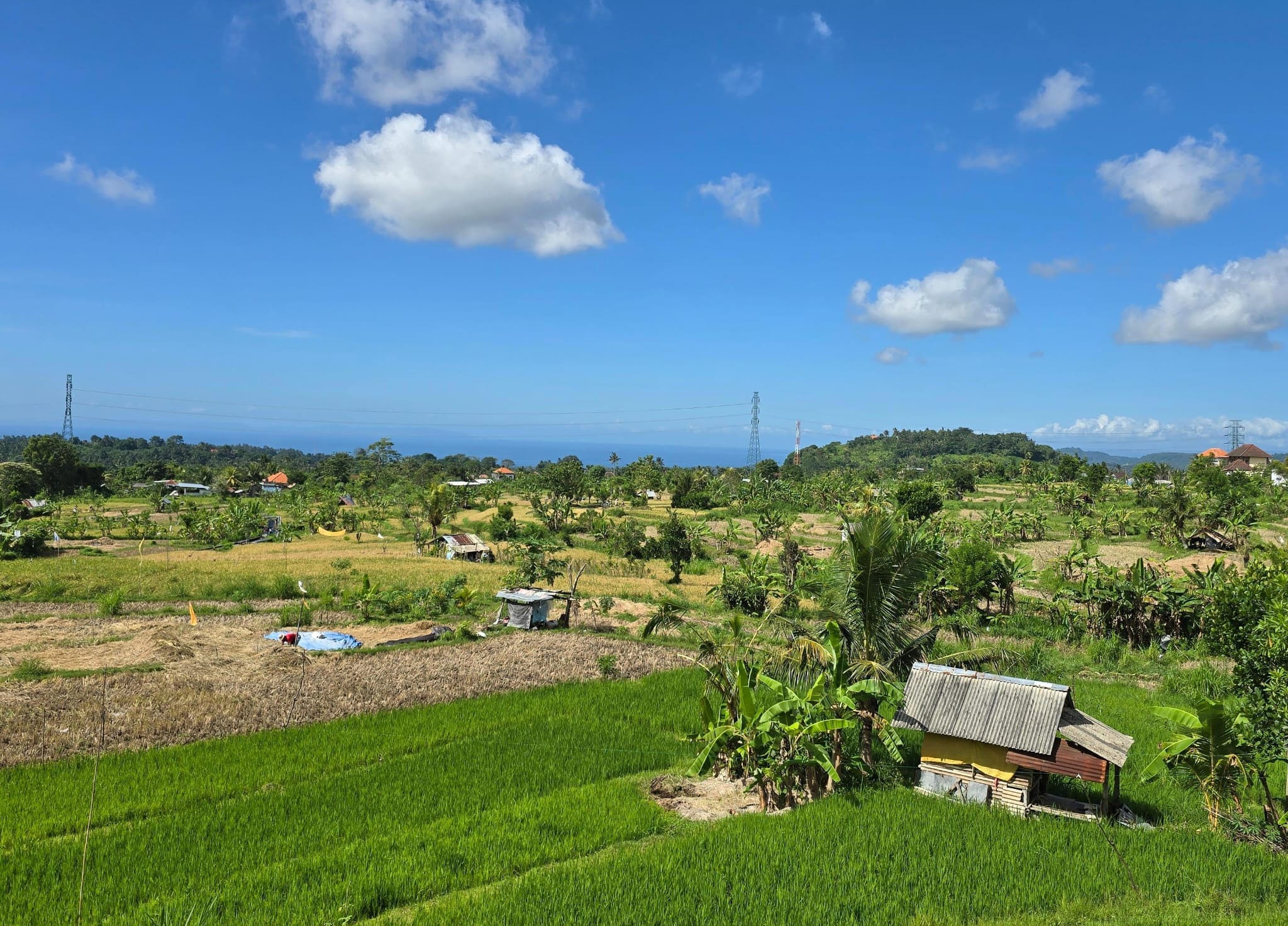
Preliminary work continues apace on the much-anticipated Bali International Oval (BIO) project with Cricket Financial Journal confirming that the sleepy seaside village of Gerogak will be the location of a cricket ground that may one day host major T20 matches.
While public documents state the site will be in the Buleleng Regency, no actual address has been mentioned which has prompted conjecture that it’s likely in the regional capital of Singaraja or the tourist district of Lovina.
However, sources have said that a 5-hectare plot located between the neighbouring villages of Gerogak and Sanggalangit is currently being prepared for further works, suggesting the clearing and grubbing of land, grading, utility installation, stakeout and survey works.
Sources have also confirmed that the site will be “beachside” of the main road, however a “proper” road into the site remains to be constructed, further giving credence to the lack of an address.
Sources further said that a hotel complex including a swimming pool will also be constructed and will cater to visiting teams and participants in the on-site cricket academy.
A project manager has also been confirmed to be present on location to manage the works.
Bali is seen as an alluring destination for cricket given its mass tourism and proximity to Australia and India. It has been mooted as a potential site if the BBL were to expand abroad, while the Asian Cricket Council has hosted meetings there in recent years to underscore Bali’s growing heft.
Opening up north Bali
Bali in recent years has pivoted its economic focus from mass tourism towards value-added niche sectors such as medical tourism, global conference and events venue and property development, which was accelerated by the Covid-19 pandemic and the Ukraine-Russia war.
The construction of the BIO adds to this new direction with the potential of luring billions of cricket fans to watch international or franchise league matches to Bali’s shores. The success of Bali United’s soccer training centre in Sukawati, Giyanyar Regency shows that sport can be another of the island’s lucrative drawcards.
But the main drawcard for the Indonesian and provincial governments, other than the potential revenues, is how an international sporting venue could anchor large infrastructure projects that open up Bali’s north.
The much-discussed idea of having Bali’s second international airport near the same area as the BIO makes sense if there is a need for international travellers to go to an ‘out of the way’ place, which raises the further question of transportation.
The proposed rail system a few years previous would stretch from Bali’s current international airport through the beating urban heart of Denpasar and up over the mountains into Singaraja and beyond would also make sense if there were a reason for throngs of sports fans to head north.
It currently takes about four hours driving time to travel north one way from the southern suburbs of Denpasar through hills, mountain passes and questionable roadways. Driver fatigue is a real danger and congested roads mean traffic jams and chancy near-fatal overtaking manoeuvres. Not to mention bus and truck breakdowns, and the risk of thunderstorms and landslides.
A train line could significantly mitigate these safety risks, especially when maintained well. And the travel time spent could be viable enough for somebody to travel from Kuta, where they are staying, to watch a T20 match in the BIO and then head back at the end of the day.
Whether this happens remains to be seen, but a successful build and regular use of the BIO will keep these options open for Bali which is fast becoming an enticing destination for cricket powerbrokers.