

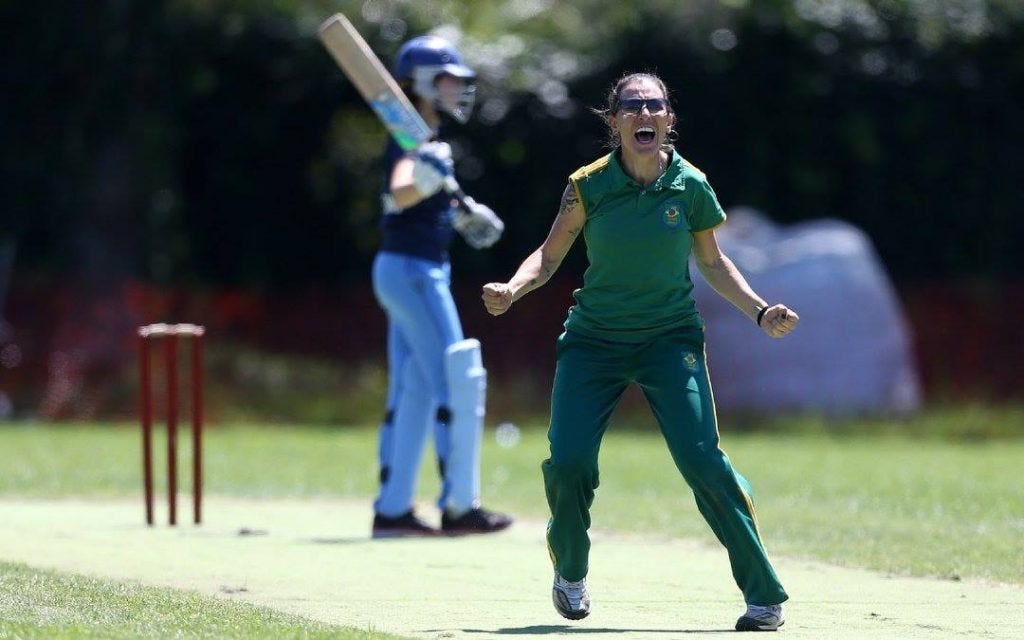
“I didn’t cry when I announced it. The tears came when I recorded a video and talked about singing the national anthem, which is one of the best feelings that I have had as a player,” exclaims Roberta Moretti.
Speaking to Cricket Financial Journal, the former Brazilian international women’s captain is referring to her decision to retire from cricket after a 12-year playing career.
“It took me a couple of days to talk to all the coaches, the board, my family and then I finally made the announcement to the team,” she says.
“It was a very sad moment for them, but funny enough, it was a very happy moment for me. I was really proud of my decision.”
While on tour to Rwanda with the national team for the Kwibuka Women’s T20 Tournament last year, Moretti felt that it was the right time to hang up the boots. In June 2025, she had been elected president of Cricket Brasil and the dual responsibilities of playing and administering had begun to take their toll.
“One of our coaches Julia Price, who was a player herself, told me that there’s going to be one day that you just know that you don’t want to do this anymore,” she says.
“Not because of physical or technical limitations, but because the transition to full-time administration work would become necessary.”
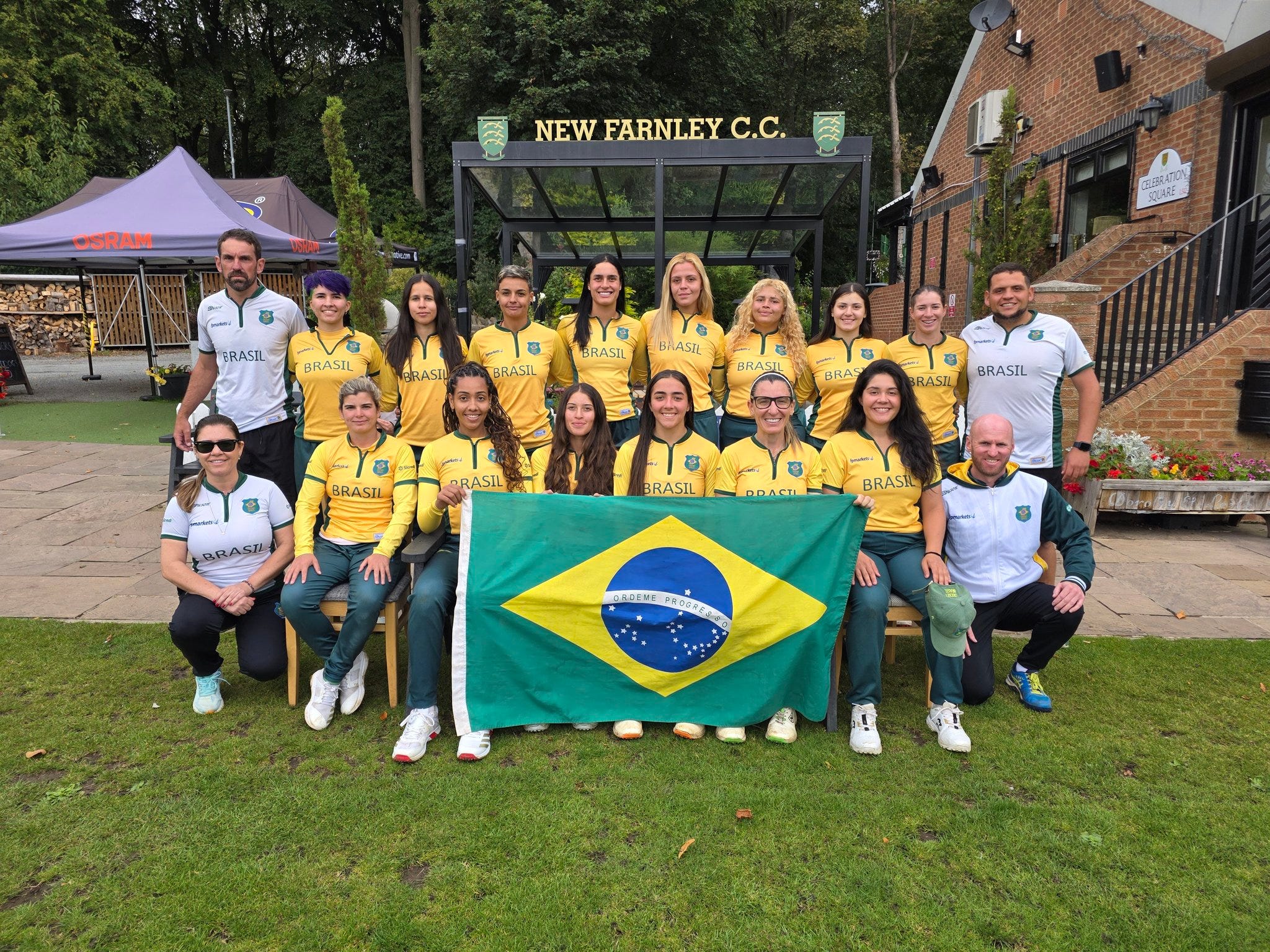
After her retirement announcement, she received a combined guard of honour from the Nigerian, Zimbabwean, Rwandan and Malawian cricketers, alongside her own teammates.
It was a highly emotional moment for Moretti, who admits to being touched by this special gesture. “It reminded me why I love this game so much,” she says.
“It’s not only because of the runs and the wickets, but how cricket brings people together and empowers them.”
Life as president
While life post-retirement has been “pretty normal”, her involvement with the game remains deeper than ever due to her administrative responsibilities. Her office in Poços de Caldas, the spiritual home of Brazilian cricket, overlooks the training centre.
“I actually live like five minutes away from the office. So, this is pretty much my house,” she chuckles.
“We have a new office for Cricket Brasil, which is absolutely gorgeous. We have a group of people working in the office every day and honestly it feels like I left one team and joined another team straight away, which is fantastic.”
However, there’s one thing that she misses dearly about post-retirement life. “I just miss hitting some balls in the nets,” she says. “I love to train; it was therapeutic to me. I think that I will still do that from time to time.”
Cricket Hubs
In a country of 213 million people, it is actually quite remarkable how a small town of 170,000 like Poços de Caldas, best known for its thermal baths, became a hotbed for the bat and ball game. It is a fascinating story of chance encounters and happenstance, which is worth telling in its own right.
Moretti confirms that while Poços de Caldas still remains the biggest hub of cricket in Brazil, the federation is keen to replicate its success elsewhere.
“Currently, we have two other main hubs, both in the state of São Paulo,” she says. “One of them is a small town called Aguaí. And surrounding that, we have another 30 schools that are participating in cricket programs.
“Plus, a short distance from Poços de Caldas, another hub in Botelhos is also growing rapidly.”
Elsewhere around the vast nation, there are hubs developing in Rio de Janeiro, capital Brasilia as well as Bahia in the northeast of Brazil. “We say that for a hub to be fully established and sustainable, it takes eight years,” she says.
“At this stage, they are all in different stages of development. But we believe that in four to five years’ time, we will have fully developed hubs with junior and adult competitions and proper grounds.”
Infrastructure
However, as with many other Associate nations, Brazil struggles with having adequate cricket infrastructure which Moretti characterises as the “main challenge”.
“The hardest part for us is to build proper infrastructure from the ground up, but thankfully we have a lot of support from local governments,” she says.
“Sometimes, we even receive financial support, but if not, they are still happy to provide us with facilities for free.”
Cricket’s inclusion in the Los Angeles 2028 Olympics has also helped matters significantly. “Since we became part of the Brazilian Olympic committee last year, it has completely changed the profile of cricket in the country,” she says.
“We receive funding from ICC and our partners plus sponsors, but most of this goes towards grassroots development and establishing junior pathways. But with the Olympic committee support now, we can finally budget for high performance.”
This financial support equates to around $800,000 USD annually, which takes care of anything high performance related such as hiring coaches, player contracts, tournaments and training camps.
“When we first went to Rwanda in 2022 for the Kwibuka, that tournament cost us 10% of our entire annual budget,” she says.
“Nowadays, both teams can participate in various tournaments without one penny coming out of development.”
As for pitches, all cricket domestically is played on matting surfaces. “We bought some special mats from the UK last year,” she says. “And they are really good; they spin, the bounce is very realistic. But we need grass pitches to go to the next level of development.”
Currently, grass nets are being built in Poços de Caldas with the support of the Surrey Foundation and the Oval Cricket Relief Trust.
“It’s going to take another 8 to 10 months before the facilities are ready for use. However, we’re still a few years away from having structured competition and tournaments being played on grass pitches,” Moretti explains.

Participation and the men’s team
Last year, Cricket Brasil achieved a significant milestone, breaking the 100,000 barrier in participation numbers for the first time. “That number is pretty much 50-50 male and female participation; people who watched or played cricket on at least three occasions during the year,” Moretti says.
“Also, we now have more than 100 junior teams through the U13, U15, U17 and U19 pathways and around 12,000 kids participating regularly on a weekly basis.”
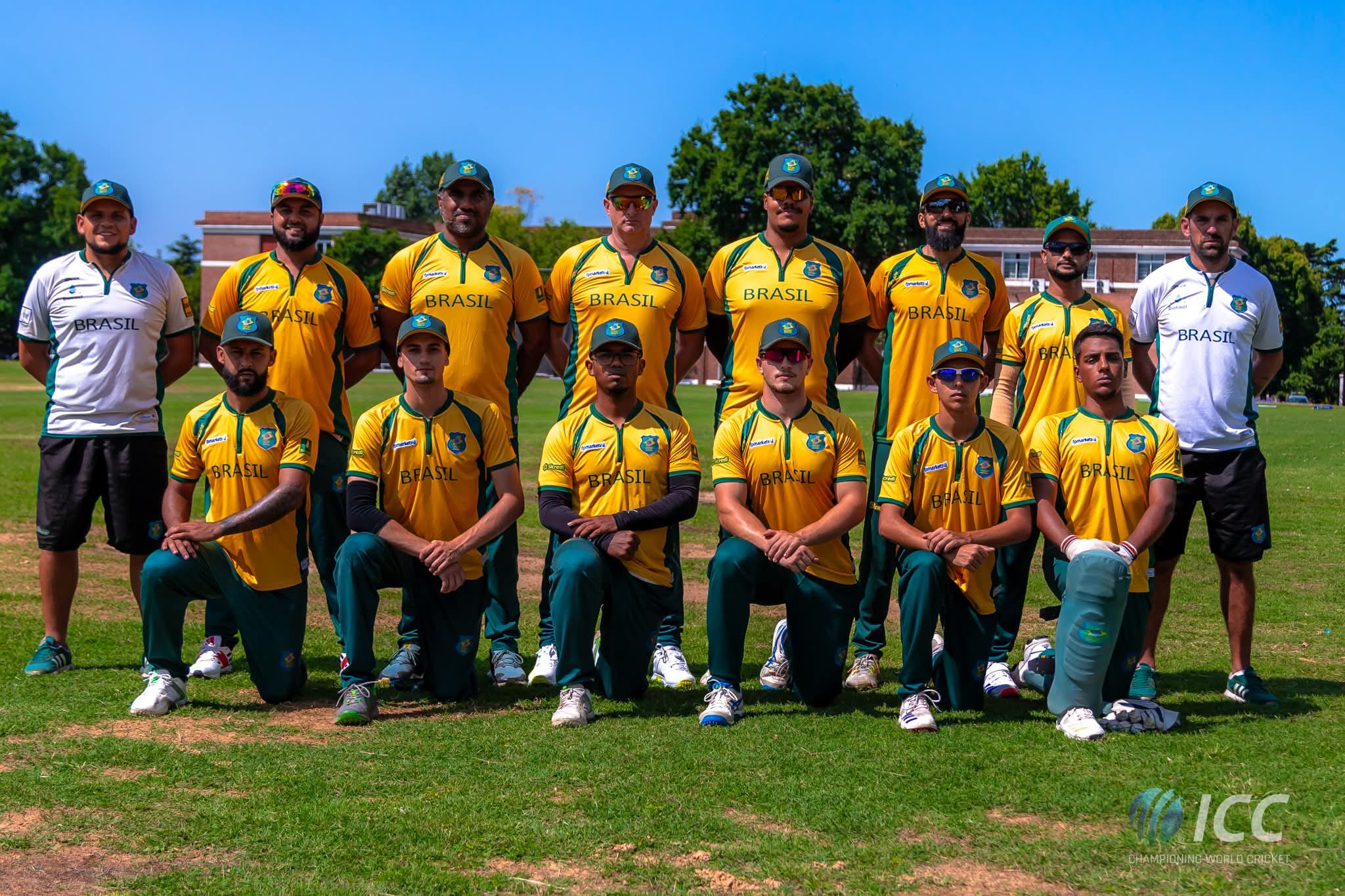
While the Brazil women’s team are the cricketing trailblazers in the nation, the men’s team is gradually closing the gap with increased investment. Although, Moretti concedes that the path for the men “is much longer.”
“Look, their cricket journey is just starting. We are ranked 89 now, compared to the women’s 29,” she says.
“We centrally contracted 11 of the 14-member men’s squad in August last year, plus the development team receives access to training, physiotherapists, nutritionists and therapists. The same thing that we provide the women; we provide the men now.”
And like the women, the men’s team have shredded the dreaded “expat” tag with almost all the new talent coming through the development hubs in Minas Gerais and São Paulo.
“When I started playing cricket for Brazil in 2014, the men’s team had one Brazilian. In 2019, we had maybe 2-3 Brazilians, but they were mostly reserve players,” Moretti says.
“But for our last tournament in the World Cup qualifiers, we had one Brazilian Pakistani guy that has been in the team since 2014 and everybody else was Brazilian-born and bred.”
In 2025, Cricket Brasil hired experienced South African cricketer Brendon Louw as coach for the men’s national team. “I think Brendon’s experience will help the boys go one step up and compete well in the upcoming South American championship,” she says.
“They won in the 2026 Central American Championships, so we have been looking forward to good results, at least within the region.”
The Rankings Quandary
Despite the positive growth and development stories, organising fixtures remains a challenge for the men’s and women’s teams.
The South American region is easily the least developed cricket region globally and contains the fewest ICC members, compared to its Asian, African or European counterparts. Plus, the rankings system acts as another barrier.
“We are going to tour Switzerland later this year,” Moretti says.
“But what is difficult is often higher ranked opponents are reluctant to play you because they want to protect their ranking. Why risk dropping down the rankings table by losing a game to Brazil?”
Therefore, Moretti wants ICC to step in and organise more tournaments for lower ranked associate nations, to provide fixture equity.
“We want to qualify for the Women’s Challenge Trophy in the next three to four years and crack the top 25 in T20I rankings,” she says.
“We are still a little bit far away from ODI status or playing countries like Scotland, Thailand or Netherlands, but I really like our trajectory.”
Future Goals & T20 World Cups
With regards to future goals, Moretti states that the top priority for her organisation is to build more infrastructure in the hubs.
“This will provide a competitive edge to all our teams, to become better. I think it’s extremely important,” she says.
“Furthermore, it will allow us to further develop our high-performance coaches for both senior and junior teams.”
Secondly, she wants to see sustainability implemented as a key pillar of Cricket Brasil governance.
“I always think that when I was a captain, I wanted to develop a team that could live without Roberta as captain,” she says.
“Then when I became a player, I wanted to make sure that I leave a team behind that can play without Roberta.
“So similarly, a very selfish goal of mine is making sure that when I leave as president of Cricket Brasil, the organisation continues to operate smoothly without me in charge.”
Lastly, Moretti would love nothing more than seeing the Brazil women qualify for their first ICC event, particularly with the T20 World Cup expanding to 16 teams from 2030.
“Look, we have to make the global qualifiers first. In the Americas region, we know how strong the USA team has been,” she says.
“So, it’s not going to be easy, but we’re talking about three more years of additional development and competition and our players travelling abroad to get more exposure and experience.
“I believe there’s still plenty we can improve.”
