

Having beaten Ireland for an emotional first-ever women’s T20 World Cup victory, Scotland eyed a boilover of Sri Lanka and an automatic berth in the 2028 edition of the tournament.
But they fell short in a final over heartbreak at Old Trafford as Full Member nation Sri Lanka held their nerve to win by three wickets.
While they walked off disappointed, the gallant Scotland proved their worth at the expanded 12-team T20 World Cup, which has grown from eight in the first three editions starting in 2009 to then 10 from 2014-24.
The other Associate nation competing was the Netherlands, who in their T20 World Cup debut were competitive in matches against Bangladesh and Pakistan.
“Would have loved to have seen Scotland automatically qualify for the next tournament, but a win over a Full Member (Ireland) is great,” International Cricket Council head of global development Will Glenwright told Cricket Financial Journal.
“The fact that we had two Associate members qualify and compete in the tournament is great.
“That’s precisely why the board made the strategic decision to expand. It’s a recognition of the competitiveness of international cricket and the women’s game. It’s a really exciting time.”
While the 2028 T20 World Cup in Pakistan will again feature 12 teams, the 2030 edition will rise to 16 - the biggest increase in tournament history to date, reflecting the growth of women’s cricket globally.
“The decision to expand the women’s World Cup wasn’t just to create an ambition, it was a recognition that more and more women’s cricket is being played by our Associate members, so that justifies and motivates that expansion and investment,” Glenwright said.
“The members have responded by playing more international cricket. We’ve been working with those members that have qualified or are most likely to qualify by preparing them for international cricket.”
In some non-traditional cricket countries, the women’s game has been identified as the growth engine compared to men’s which often has to battle a more competitive sports landscape.
Thailand, ranked 12th in women’s T20Is, is a prime example but China’s re-emergence has also underscored this with their 42nd ranked women’s team having recently qualified for the upcoming Asian Games.

While it will be quite something to see cricket’s power nations and superstars competing at 2028 Los Angeles, the Olympic halo’s most significant impact is being felt beyond traditional boundaries.
For China, where Olympic sports are granted priority and resources, it’s been a game-changer with government investment being pumped into Chinese cricket
There have been other major developments around the world, including Rwanda, Bhutan, Indonesia and Uganda.
“It (Olympics) does legitimise our sport in the eyes of governments and sponsors, particularly in countries where there’s a really strong sporting culture, but also where cricket’s significance isn’t quite there yet such as China,” Glenwright said.
“The success of a country like Thailand has been great for other members to somewhat replicate their model.
“Rwanda is a great example and they’ve invested in the women’s game, recognising that it was a faster track to international representative cricket.
“They’ve also allowed them to own a space and create an aura….so that it's got women and girls at the forefront of the playing experience. It changes the whole dynamic of how you present the game.”
The only time that a women’s World Cup has been played outside a Full Member nation was in 2024 when political unrest in Bangladesh saw the tournament moved to the United Arab Emirates.
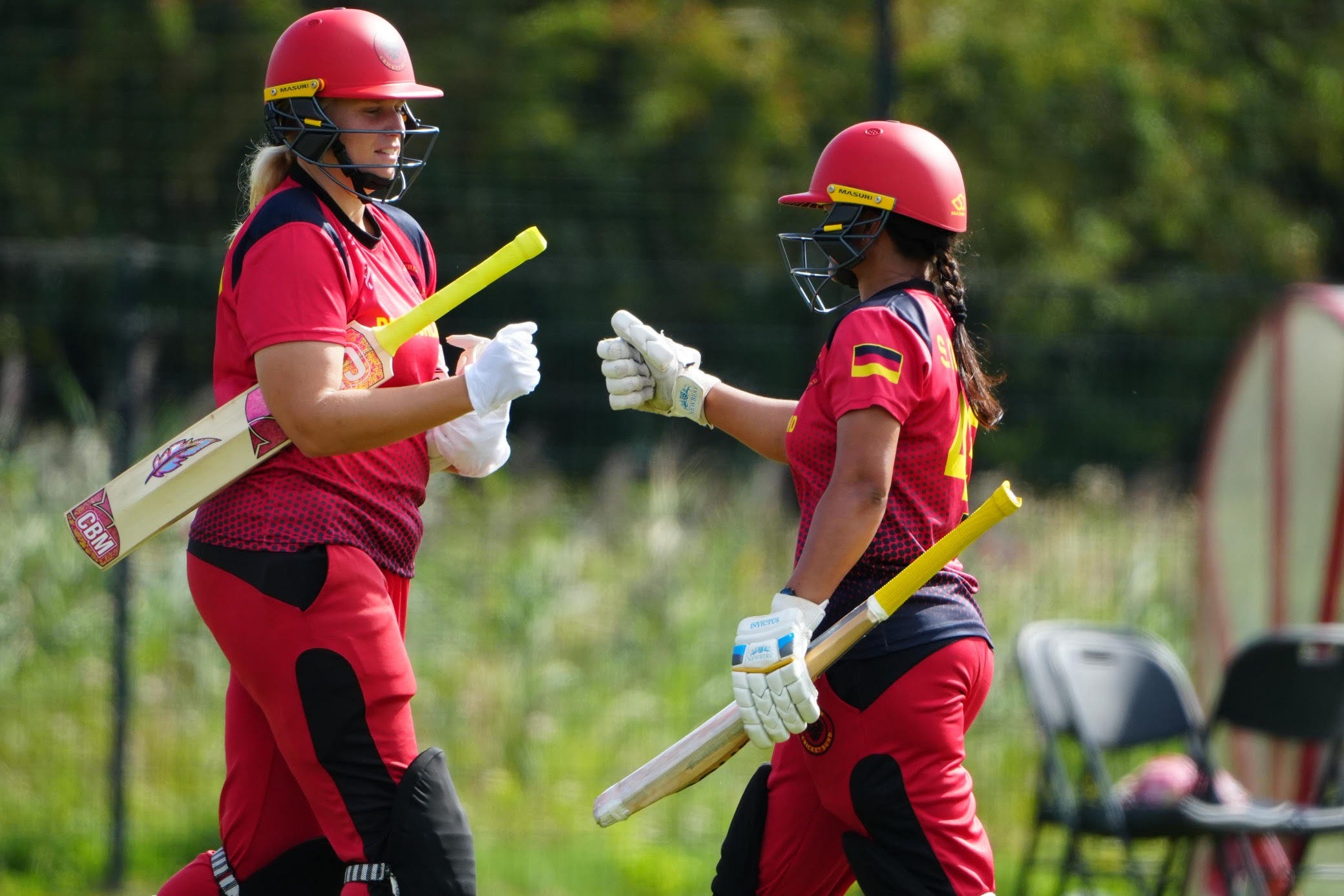
There are a number of Associate countries clamouring to one day host a marquee ICC women’s event. As the hub of cricket in Southeast Asia, Malaysia is ready to stage a T20 World Cup while Germany - an economic powerhouse with encouraging results in women’s cricket - have long-term goals.

“We’ve created that precedent in the men’s World Cups,” Glenwright said. “We’re starting to see more governments, on the back of the Olympic decision, invest in cricket infrastructure and seeing the value of ICC events such as the Emerging Nations Trophy being taken to emerging markets.
“To have nearly a quarter of our members hosting World Cup qualifiers last year is something that members should be proud of.
“Hopefully it leads to one day an emerging market hosting a women’s World Cup or T20 World Cup.”
